Market Insights · June 22, 2026
By James Park · Verico Paragon MortgagePal Inc. · 7 min read
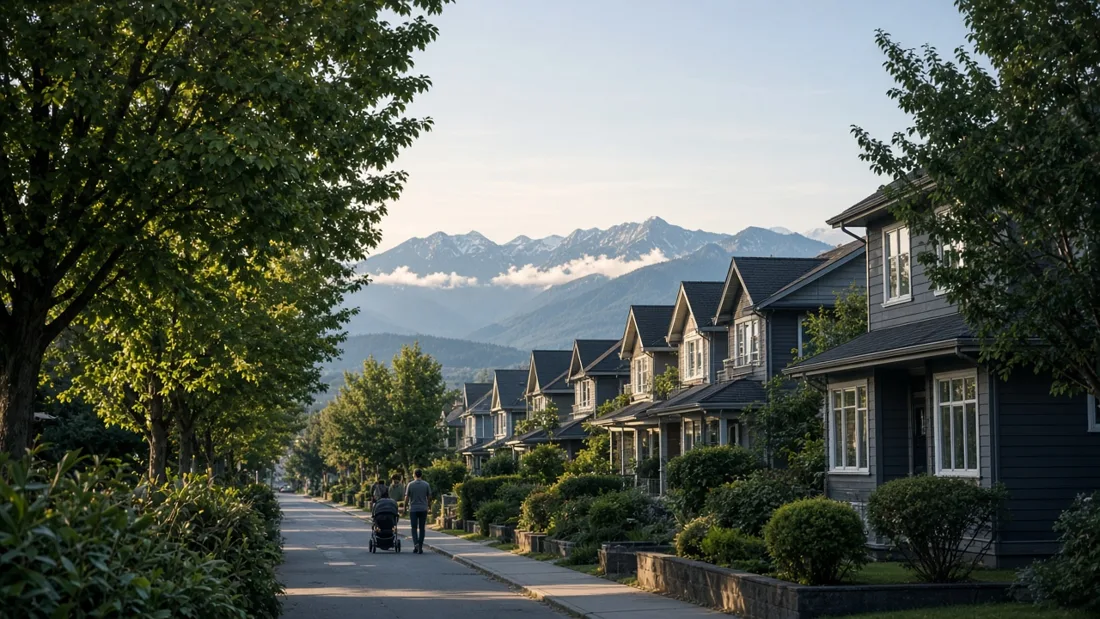
It's James Park here, your local mortgage broker, and today I want to talk about something that's been making headlines: Vancouver's housing starts hitting a three-year high. This isn't just a number; it's a significant indicator that could reshape our local real estate landscape. For years, we've grappled with a persistent housing supply shortage, driving up prices and making homeownership feel out of reach for many. Now, with more homes breaking ground, we're seeing a potential shift that could bring some much-needed balance to the market.
The Surge in Housing Starts: What Does it Mean?
When we talk about housing starts, we're referring to the beginning of construction on new residential buildings. A three-year high in Vancouver signals a robust period of new development, particularly in multi-unit construction. This surge is largely driven by efforts to address the ongoing housing crisis and meet the demands of a growing population. More housing starts eventually translate to more homes available for sale or rent, which can have a ripple effect across the entire market.
For a long time, the narrative in Vancouver has been one of scarcity. Limited supply coupled with high demand created a fiercely competitive environment. Now, with an increase in new construction, we're moving towards a period where buyers might find themselves with more options and potentially a stronger negotiating position. This doesn't mean prices will plummet overnight, but it does suggest a move away from the intense seller's market we've grown accustomed to.
Shifting Dynamics: From Seller's to a More Balanced Market
The influx of new homes can gradually shift the power dynamic in the real estate market. When there's more inventory available, buyers have the luxury of choice. They can take their time, compare properties, and make decisions without the intense pressure of multiple-offer situations. This is a welcome change for many prospective homeowners who have felt rushed and outmaneuvered in recent years.
It's important to remember that real estate markets are complex and influenced by many factors. While increased supply is a positive step, other elements like interest rates, population growth, and economic stability will continue to play a significant role in shaping the market.
Navigating the Current Market: Tips for Buyers
So, what does this mean for you if you're looking to buy a home in Vancouver?
- More Choice, Less Rush: With more inventory coming online, you might find a wider selection of homes. Take your time to research and view properties that truly meet your needs and budget.
- Negotiating Power: In a more balanced market, there's often more room for negotiation on price and terms. Don't be afraid to make a reasonable offer and work with your agent to get the best deal.
- Lender approval is Key: Even in a shifting market, being approved by a lender for a mortgage is crucial. It gives you a clear understanding of what fits your budget and signals to sellers that you're a serious buyer.
- Consider New Construction: With the surge in housing starts, exploring new developments could be a good strategy. You might find competitive pricing and incentives from builders looking to sell units.
The Role of Mortgage Rules in Today's Market
Understanding Canadian mortgage rules is more important than ever. Here are a few key areas to be aware of:
- CMHC Insurance: If your down payment is less than 20% of the home's purchase price, you'll likely need mortgage default insurance from providers like CMHC. This insurance protects lenders and allows you to purchase a home with a smaller down payment. The maximum purchase price for a CMHC-insured mortgage is $1.5 million. The minimum down payment is 5% on the first $500,000 and 10% on any amount above that.
- BC Property Transfer Tax (PTT): This is a one-time tax paid to the Province of British Columbia when real estate changes ownership. The general rate is 1% on the first $200,000, 2% on the portion between $200,001 and $2 million, and 3% on the portion greater than $2 million. For residential properties over $3 million, an additional 2% tax applies to the amount above $3 million. There are exemptions available, such as for first-time homebuyers or newly built homes, so it's worth exploring if your options look.
Mortgage Renewals: An Opportunity to Re-evaluate
For those who already own a home, mortgage renewal is a regular part of the homeownership journey in Canada. Most mortgages have terms of typically five years, meaning you'll likely renew your mortgage several times before it's fully paid off. Your lender is required to send you a renewal statement at least 21 days before your term ends.
This isn't just a formality; it's a prime opportunity to review your financial situation and potentially secure a better rate or terms. Don't simply sign the renewal offer your current lender provides, as it might not be their most competitive rate. Shopping around and negotiating can save you a significant amount over the next term.
FAQ
Q: What is the First Home Savings Account (FHSA) and how does it help first-time buyers? A: The FHSA is a new registered savings account designed to help first-time homebuyers save for a down payment. Contributions are tax-deductible, and qualifying withdrawals for a first home are tax-free. It combines the tax benefits of an RRSP and a TFSA, allowing you to save up to $8,000 per year, with a lifetime maximum of $40,000.
Q: Can I use both the FHSA and the RRSP Home Buyers' Plan (HBP)? A: Yes, you absolutely can, and for many, it's a smart strategy! The FHSA allows tax-deductible contributions and tax-free withdrawals for a first home without repayment. The HBP lets you withdraw up to $60,000 from your RRSP tax-free, but you must repay it over 15 years. Combining them can significantly boost your down payment, potentially giving a single buyer access to $40,000 from an FHSA and $60,000 from an RRSP HBP.
Q: Will the increased housing starts lead to a significant drop in Vancouver home prices? A: While increased supply can certainly ease upward pressure on prices and create a more balanced market, a dramatic drop isn't necessarily a given. The British Columbia Real Estate Association (BCREA) anticipates a slight decrease in the average price in BC for 2026, largely due to weakness in more expensive Lower Mainland markets. However, they also note that improved affordability and pent-up demand could lead to a rebound once economic conditions stabilize. The market is complex, and while buyers may gain more negotiating power, prices are more likely to stabilize or see modest adjustments rather than a steep decline.
The Vancouver real estate market is always evolving, and staying informed is your best defense. If you're considering buying, selling, or renewing your mortgage, understanding these market dynamics and mortgage rules is crucial.
Ready to explore your mortgage options in this changing market? Take the first step with my free 2-minute free intake for me to review at free intake for me to review or give me a call directly at 778-222-7109. I'm here to help you navigate the complexities and make the
Related mortgage resources
- Explore my free intake for me to review to see where you stand with no obligation.
- Explore my home purchase planning to plan a confident purchase.
- Read Surviving Mortgage Renewal Shock in Vancouver: Smart Refinancing Strategies for a related BC mortgage perspective.
Any rate mentioned is historical and illustrative as of the publish date. Current rates are quoted with APR, term and date on your call.